Featured

$11B on Ed Tech

Forbes, Ed Tech, and Lots of Questions

The following Forbes article discusses the advance of technology in education and how it has become a major component of schools. According the to article 11 billion is being spent on technology in schools. Crazy amounts of money! As you would expect out of a Forbes article it makes the all too common connection between school, data, and business. What are the results? How effective are the things we are using? What’s the growth? What’s the bottom line?

It finally brings up Impact Research which is developed a handful of questions to assess the positive impact of technology in education.

  • How does this learning solution actually impact student outcomes? At what scale, and by which standards?
  • What intervention most increases interest for a subset of students?
  • Which characteristics contribute most to an effective learning experience?

Impact Research is focused on finding the return on investment in educational technology by focusing on: ” better grades, higher confidence, increased interest, or stronger engagement.”

I like these questions and the ideas this article brings up but to me it raises many more questions of what is engagement and how do you measure it? Are kids more engaged because they have a computer in front of them allowing them access to a wealth of knowledge and way to best express their thinking? Or are they more engaged because they have a computer in front of them but still aren’t engaging in higher level thinking. When I was in high school and college I became a master of being “engaged” but doing nothing. I recall several visits to the library without actually getting any studying or homework done.

Then there the issues of do these questions work for all schools? Even within the same city, state, country? Are school assessing their educational technology use with these questions? As a technology specialist this is the first time I was exposed to them as an assessment. And the bigger question of how to measure of this? By the time data is collected and analyzed on which technologies work the best those are outdated and were constantly lagging behind. On the other hand it cannot be best practice to just buy the newest thing a hope that it increases student engagement, confidence, and overall learning.

So in following suite with Forbes I’m not going to answer these questions and just bring up more questions. Who knows if technology in education is benefiting students. I like to believe it is but from kindergarten to senior year to first job and post-high the world is a very different place for all kids. It’s tough to say if teaching kids how to save a document or write in cursive will help them in the future. I do think that being familiar with devices, knowing ways to troubleshoot, and conduct research is a must aligning with the popular 21st Century Skills. Decisions on what technology to use and how to use it are heavy questions and it is nice to see there conversations finding their way into public eye.

Death of the Real World

During my undergrad one of my professors expressed his discontent with the expression the “real world.” Explaining how it devalued the world students are living in as not being “real” and some artificial construct. The world students are living in, while different from our own, is very much real. This notion has stuck with me for quite some time, and I tend to cringe when I hear pretty much anyone use this phrase. The more I think about the “real world” I wonder if we even know what it’s like or if this “real world” exists. 

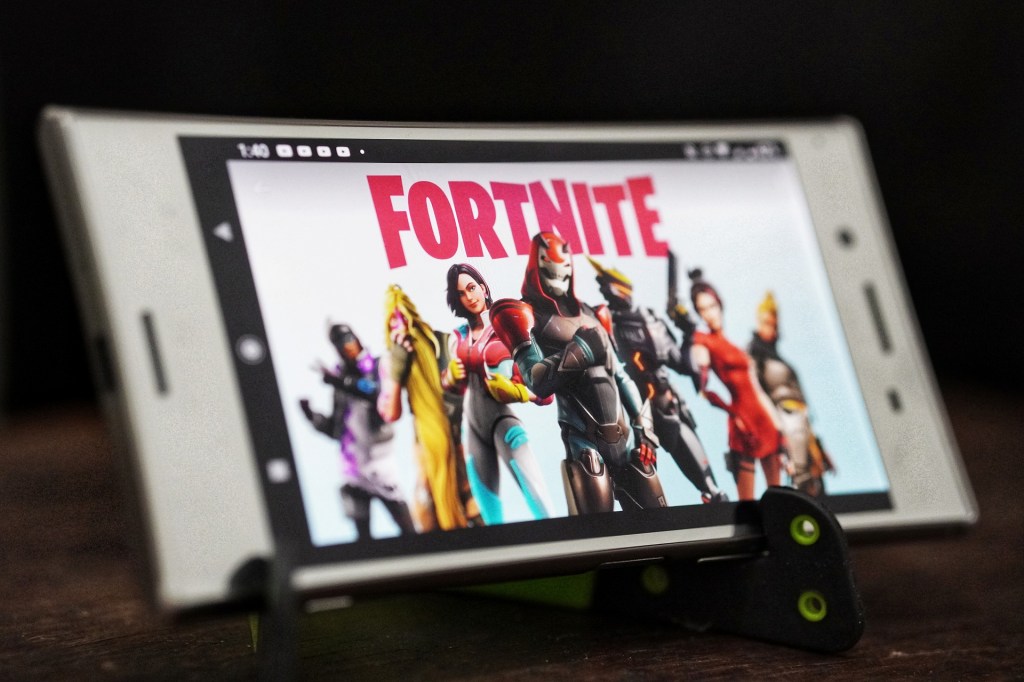
The way students are interacting with the world has and is changing drastically. Jobs may be the same, but the way employees’ complete tasks and interact at these jobs is totally different and will continue to change. This changing workforce combined with the movement to reform education leads me to the idea the “real world” is dead. I have no idea what the world will look like in 5, 10, or 20 years and neither does anyone else. So, this notion that what students are doing at school is great but “it doesn’t work in the real world” is ludicrous to me. Especially when students in K-12 are creative and interested in new things often for the first time. Shutting them down right away is crazy to me. Not only that but students have so much more access to information, experts, foreign nations, and production tools that didn’t exist a few years ago. The “YouTuber” was not a word, let alone a profession, when I graduated from high school in 2010. Now there’s Kylie Jenner who is making money from posting on Instagram (or something, I don’t know the specifics exactly) or Ninja who made over $500,000 a month playing Fortnite. And what I recently learned from the Netflix series Broken there’s a dedicated police force to the world of counterfeit makeup. This is the real world. It’s not my world, my friends, and probably not my neighbors, but the jobs are real, the people are real, their passions are real. 

While I’m not saying everyone is a success story in social media fame or their new app, repeating this idea of “that’s not how it works in the real world” is a negative one. Being a professional athlete is a dream many don’t achieve but it didn’t stop me from playing sports nor does it make sports any less important to many schools. I learned a lot about working as a team in my sports career, having students participate and utilizing new technologies with supervision (like coaches or teachers) could lead to better digital citizenship and usage of the world wide web. If people, especially young people, feel supported and are allowed to explore and create, amazing things can happen.  

So, what is “the real world?” I don’t know, but I do feel strongly that we should stop using this phrase and usher in the death of “the real world.” 

Is School Community?

Through my undergraduate and graduate education courses a large focus has been on educational philosophy. Like most, as I worked more in schools and took more classes my philosophy changed and I became more excited about specific things such as ed tech, data privacy, etc. One thing that hasn’t changed since my first teaching course, is the idea that school should be fun.  

I’ve been volunteering at a local Boys and Girls Club and part of our conversations are ways the club, community, and school can support teenagers. In these conversations kids brought up the lack of engagement or school being boring. This is a common complaint for middle and high school kids but one teenager brought a new idea that I had not thought of before. As we discussed community support one teen brought up that things happen at home or within the community but once you got to school you couldn’t talk about it because, paraphrasing their words, school is school and not part of the community. 

Image by Wokandapix from Pixabay

This blew me away. The thought that school is not a place to share and discuss ideas and it is separate from the rest of the community is something I had never thought of before. As I mulled over this idea, I looked back on my own educational experience. Was school part of the community? Sure, I went to Friday night football games, played sports, and went to school plays or concerts but were these things building a safe and inviting community? While I was free to talk about our schools sports teams or theater program we didn’t talk about the development of neighborhoods, social and emotional programs in the community, and I didn’t turn to any of my teachers, counselors, or principals if I had a problem I needed help with. But on the opposite side of that, while I was teaching I had several students willing to seek advice from myself, the counselors, or principals. Is it a culture thing? Do students know these support systems exist? How do you show students they can turn to school for help? 

So, I’ve been stuck on this idea of school being part of the community yet at the same time its own separate thing. Does making school more fun and engaging help to make it part of the community? Do we need to give middle and high school students more credit and allow them to talk about what they see and feel about what is happening in the world around them? How can we get more students to feel inclusion between school, the community, and the world? I’m not sure what to do with this idea but I can’t imagine this teenager is alone in their thinking. How does school become more than just school? 

Image by Gerd Altmann from Pixabay

If the Shoe Fits

Attending conferences, observing teachers, and hearing keynote speakers from all parts of the United States, I’ve come upon what most people in education already know. There are many ways to reach the same results. This is your art of teaching instead of science of teaching idea. As I watch and participate in the educational technology explosion, I find teachers don’t use a lot of technology or get caught up on the other side of just doing the latest and greatest. After doing some of my own reflecting and listening to Eric Scheniger discuss personalized learning, I wanted to voice my ideas on educational technology. 

To start I want to look at my role in my schools. I feel I have a strange roll because some may see me as a boogie man type person here to make them jump through more hoops and force them to use the latest technology. Some a savior who is willing to help guide them through their technology binge, and others a total ghost who don’t want to talk to me or need to talk to me, their relationship with technology is just right and doesn’t need to change. As I’ve been consulting teachers with different teaching experience levels, subjects, and skills I’ve been thinking of a way to ease everyone into utilizing technology and their skill set to the fullest. I’ve always been an analogy guy and am always searching for good ones to explain US History, technology, sporting events etc. The one I’ve settled on is a shoe-based analogy. You must find the right shoe for your lifestyle. Right tech/tools for your classroom. 

Air Force One Shoes

I don’t want to suggest the newest pair of Air Force Ones to the cross-country runner, the Sketcher Shape Ups to the twenty-something year old. I also don’t want to suggest creating a flipped classroom to the teacher who just uses technology for their gradebook and to communicate. Or introduce the basic ideas of an LMS to a teacher who is proficient in posting, communicating, and providing feedback through one already. It’s about finding the right shoe for the right job and that can vary from day to day, month to month, even class to class. I have all sorts of shoes for all sorts of occasions and teachers should have the same for tech tools and tools in general. 

The real challenge for me here comes in two different forms. One is helping teachers decided which tools are best for which occasion. I’ll admit I have worn the wrong shoes to play basketball, to work, the beach you name it. And while these consequences may be readily apparent with blisters, embarrassing comments, or sheer discomfort it’s not always obvious when teaching. Kahoot is a great example of an engaging tool in education but if solely used for what one of my classmates referred to as “Jeopardy Knowledge” then are we really using the correct tool? Students are engaged, the teacher isn’t lecturing, there could even be some collaboration between students. On the surface the shoe fits but are we just really making memorization more fun? Is there a better shoe out there to serve our intended purpose? 

My second challenge is realizing when it is time to replace your old shoes or even try a new brand. You have them, I have them, the pair of shoes you are unwilling to let go of. They are comfortable, look fine, and you have so many memories with them. Why take the time to shop for a new pair, spend money, and break them in all over again? And worst case, what if you don’t like the new pair? Same idea goes with tools and technology in the classroom. All teachers have their handful of go to items that are safe, comfortable, and they work. But how do you recognize when is it time to move away from these tools and try new ones? 

Along this same idea is brand loyalty. I made a pact with myself at a young age I would never own a pair of Sketcher, a pact I have kept to this day. But now I fear I might be missing out sticking to my Nikes, Vans, and Adidas. The same is true with all these tools. I feel there is so much focus on Apple vs. Google vs. Microsoft and evaluating tools based their brand, not their use. I sit here as a Google Certified educator, writing in Microsoft Word, and working for at an Apple 1:1 elementary. Breaking away to try something new is a risk that needs to happen, not all the time but once a year, once a semester try something add it to the shoe rack and go back and try them again. If you hate it, try another tool. The best part is most of these tools don’t cost you $100 plus to try out and find you don’t like it, many are free, have a free version, or counterpart. 

So, what’s the right shoe? That is something you’ll need to figure out for yourself, school, and students. Try out several some within your comfort zone and some outside. You’ll never know what might fit if you don’t try. 

Image by Gerd Altmann from Pixabay

About Me

My name is Alex Gorton, I am a Michigan transplant currently living in Utah. I completed my undergraduate degree in Interdisciplinary Social Studies: Social Studies Education in 2014 at Michigan State University and a Master of Arts in Education Technology in 2018 at Michigan State University. After graduation I found a job as an 8th and 9th grade teacher at DaVinci Academy in Ogden, UT and am currently a School Technology Specialist in Davis School District.

As I continue to explore the world of technology integration into schools I have found myself coming up with more questions than I do answers. This blog is designed to be a way to put some of the questions into the atmosphere in hopes that solutions may follow.

Design a site like this with WordPress.com
Get started